Summer Safety Tips for Families in Queen Creek: Heat, Water, and Outdoor Activities

Queen Creek · Community Photo
Summer in Queen Creek means months of triple-digit heat — and for families with young children, that heat changes the calculus for nearly every outdoor activity from the splash pad to the backyard pool. A few practical precautions, taken seriously and consistently, make the difference between a safe summer and a preventable emergency. Here is the complete guide.
Heat Safety: Why Arizona Summers Demand Extra Caution
According to the EPA's guidance on children and extreme heat, children's smaller body mass to surface area ratio makes them more vulnerable to heat-related illness than adults, and they are more likely to become dehydrated because they lose fluid more quickly. In a desert climate like Queen Creek's, that vulnerability is amplified by extended exposure to sustained high temperatures. According to pediatric guidance on heat illness, watch for heavy sweating, weakness, and dizziness as early signs of heat exhaustion — move the child indoors or to shade, offer cool water, and apply damp cloths to the skin. Heat stroke, marked by a body temperature above 104°F and confusion or loss of consciousness, is a 911 emergency requiring immediate cooling with ice packs while help is en route. According to the CDC, a parked car in Arizona heat can become lethal within minutes — never leave a child unattended in a vehicle, even briefly, even with a window cracked.
Water Safety: Pool Guidelines for Desert Living
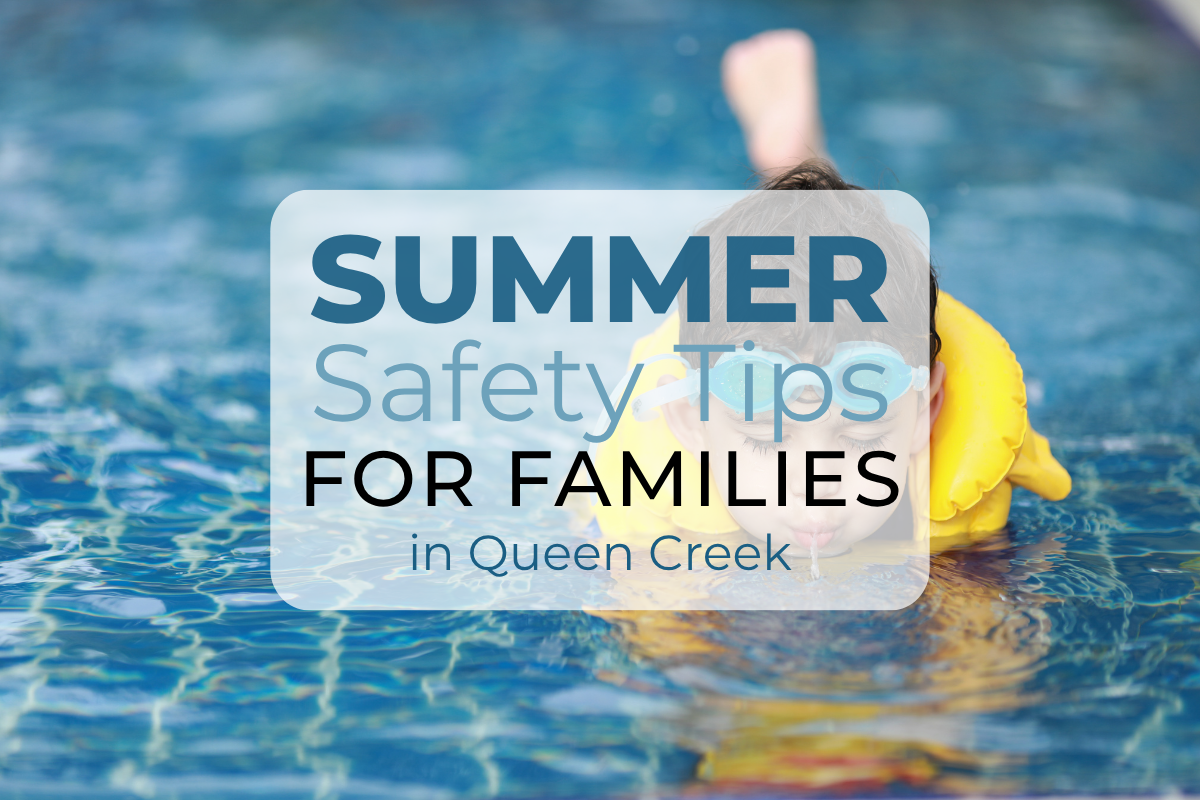
Backyard pools are common across Queen Creek's master-planned communities, which makes water safety a daily consideration rather than an occasional concern. According to the CDC, drowning is the leading cause of death for children ages 1 to 4 — and it can happen silently, in seconds. According to the American Academy of Pediatrics, layered protection is essential: a four-sided fence with self-closing, self-latching gates that fully isolates the pool from the house, constant "touch supervision" for young children, formal swim lessons once a child is ready, and U.S. Coast Guard-approved life jackets for open water. Research shows pool fencing alone can prevent more than half of drownings among young children — making it the single most impactful step a Queen Creek family with a backyard pool can take.
Sun Protection: The Arizona Standard
According to Nemours KidsHealth, the American Academy of Dermatology recommends SPF 30 or higher, broad-spectrum sunscreen for every child, reapplied every two hours and immediately after swimming. In Queen Creek's desert sun, that reapplication schedule matters more than in milder climates — UV intensity is consistently high through the summer months. According to the FDA, limiting outdoor exposure between 10 a.m. and 2 p.m. and using lightweight long sleeves and broad-brimmed hats provides protection that sunscreen alone cannot. Hydration deserves equal emphasis in Arizona's dry heat: children should drink water regularly throughout outdoor play, not just when they say they're thirsty, since thirst is already a sign of mild dehydration.
Neighborhood Preparedness: Queen Creek's Community Layer
Queen Creek's HOA-managed pools and community amenities offer a built-in layer of safety infrastructure — lifeguard staffing standards, posted pool rules, and fencing requirements that meet code. Beyond formal infrastructure, neighbors looking out for each other matters: a "water watcher" system at group pool gatherings, where one designated adult is responsible for active supervision at all times, removes the diffusion of responsibility that contributes to many preventable incidents. Checking on elderly neighbors during extreme heat advisories and sharing community heat-safety reminders through neighborhood apps are small practices that add up to a genuinely safer summer for the whole community.
Learn more about healthy summer living on Discover Queen Creek. Looking for a family-focused community? Connect with Ken and Velma Rohn at The Rohn Group.
Sources: epa.gov — Protecting Children from Extreme Heat, swpedi.com — Heat Exhaustion vs. Heat Stroke in Children, cdc.gov — Infants and Children and Heat, cdc.gov — Summer Swim Safety, healthychildren.org — Water Safety and Young Children, kidshealth.org — How to Choose and Use Sunscreen, fda.gov — Sunscreen Guidance